System Design Interviews: Using the 40 Minutes, Common Questions, What to Watch For
Split 40 minutes into five stages: clarify requirements, high-level design, data model and API, deep dive, wrap-up. Includes a requirements question table, deep-dive topics, and frequent questions grouped by theme.
On this page · 11 sections
A system design interview has no single right answer. The interviewer watches how you turn a vague requirement into a design whose trade-offs you can explain. Interviewers at North American companies are usually trained to a common rubric: did you clarify requirements, does the architecture cover the core features, and can you explain trade-offs such as consistency versus availability. Forty minutes is tight, so this note gives a time plan first, then what to ask and say in each stage, then frequent questions and things to watch for.
The Short Version
- Split 40 minutes into five stages: clarify requirements (5), high-level design (10), data model and API (5), deep dive (20), wrap-up (5).
- For senior roles, the weight is on non-functional requirements: settle latency, consistency, availability, scale, and read/write ratio first.
- In the deep dive, go deep on one or two areas you know best. That scores better than touching every area lightly.
- Give the reason and the cost for every technical choice. Don't recite a memorized design.
What the interviewer is looking for
| Dimension | What the interviewer wants to confirm |
|---|---|
| Clarifying requirements | You confirm users, core features, and non-functional needs before drawing |
| Complete architecture | Every core feature has a path through the design |
| Trade-offs | You can say what each choice gives up |
| Depth | On one or two key points you can reach implementation details and failure cases |
| Collaboration | You move it forward like a discussion with a colleague, not a solo talk |
Five stages in 40 minutes
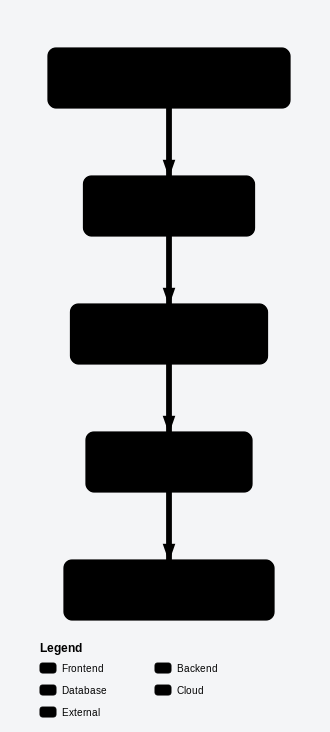
Stage 1: Clarify requirements (5 minutes)
Functional requirements: Who uses the system (regular users, admins, paying users, other services)? How do they reach it (web, mobile, API)? Which one or two features are the core?
Non-functional requirements: this is where senior candidates stand out. You don't need every question; pick three to five that fit the problem:
| Dimension | How to ask |
|---|---|
| Latency | What is the acceptable latency at p50 and p99? |
| Consistency | Do we need strong consistency, or is eventual consistency acceptable? |
| Availability | What availability target are we aiming for, 99.9% or 99.99%? |
| Scale | Roughly how many users, and what is the peak QPS for reads and writes? |
| Read/write ratio | What is the read-to-write ratio? |
| Data | What does the data look like, and how large is it? |
| Traffic shape | Are there traffic spikes or strong daily patterns? |
| Durability | Can we ever lose data? |
| Duplicates | How should duplicate requests be handled? |
| Security | Are there authentication, privacy, or compliance requirements? |
Capacity estimate (optional): rough QPS, storage, and bandwidth with round numbers. The point is to show the design fits the scale, not to be precise.
Stage 2: High-level design (10 minutes)
- Start with the simplest path: client → load balancer → service → database.
- Add a cache, a message queue, or a CDN only as the requirements call for them, and say what each one solves.
- Choose a database and say why:
| Type | Examples | Fits when |
|---|---|---|
| Relational | PostgreSQL, MySQL | You need transactions and strong consistency |
| Key-value | Redis, DynamoDB | High read/write volume with simple queries |
| Document | MongoDB | The structure changes often |
| Wide-column | Cassandra | Write-heavy or time-series data |
When the diagram is done, check that every core feature has a path through it.
Stage 3: Data model and API (5 minutes)
- Identify the core entities and their relationships, and which data must change together.
- Give the main APIs, such as
GET /resources/{id}andPOST /resources. - For writes, say how they stay idempotent, for example with a client-supplied idempotency key.
- For list endpoints, say how pagination works, and consider batch or streaming APIs where needed.
Stage 4: Deep dive (20 minutes)
Go deep on one or two points. Common deep-dive topics and what you can cover in each:
| Topic | What to cover |
|---|---|
| Idempotency and no duplicate processing | Unique IDs plus idempotency keys, optimistic locking (CAS updates), confirming in both the queue and the database, Saga compensation |
| Low latency | Caching (cache-aside, write-through, TTL, hit rate), moving non-critical work off the request path, timeouts, retries with exponential backoff, circuit breakers and degradation |
| High availability | Replicas, primary failover, multiple data centers |
| Consistency | Strong (two-phase commit, Raft) versus eventual (event sourcing, Saga, read/write separation), and why you chose one |
| Scale | Stateless services behind a load balancer, sharding (consistent hashing, hot keys), synchronous versus asynchronous replication |
| Caching | What data is cacheable, how much memory it needs, the effect of stale data, the target hit rate |
Stage 5: Wrap-up (5 minutes)
- Monitoring and alerting: key metrics, logs, distributed tracing.
- Load testing and capacity planning.
- Where the bottlenecks and single points of failure are, and what happens when they fail.
- What you would improve next with more time.
Frequent questions
These are common questions grouped by theme, collected from public interview reports. Work through at least one per theme end to end; for the rest, be able to name the core difficulty:
| Theme | Questions |
|---|---|
| Storage and data | Key-value store, Dropbox-style file sync, collaborative documents (Notion-like), sorting large data sets, migrating large data to the cloud |
| Messaging and streams | Kafka-like stream processing, RabbitMQ-like distributed queue, notification service, live comments |
| Counting and ranking | Distributed metrics collection and aggregation, Google Analytics-style tracking, top K (popular articles, rankings), like counts for high-profile accounts, live viewers on a page |
| Infrastructure | API rate limiter, job scheduler, distributed tracing, cluster health monitoring, on-call escalation, a control plane for a distributed database |
| Transactions and payments | Credit card processing, wire transfer API, hotel booking, price alerts, live stock prices |
| Location and real time | Ride matching, ETA and location sharing, surge pricing |
| Product features | Calendar, photo sharing, weather app, A/B testing platform, login and authentication, limiting concurrent streams per user |
What to watch for
- Don't start by drawing. Clarify requirements first, then design.
- Don't try to cover everything in the deep dive. Pick the one or two areas you know best. If you know caching well, take the cache design all the way to its failure cases.
- State the cost of every choice. If you pick eventual consistency, say what stale data a user might see and whether that is acceptable.
- Move it forward as a discussion. Use "we could… does that direction work for you?" and check which area the interviewer wants to go deeper on.
- Estimate with round numbers. Estimates are for judging scale; don't spend long on exact arithmetic.
- Save time for the wrap-up. Monitoring, load testing, and bottleneck analysis are often where senior candidates earn extra credit.
References
- Google SRE Book: Service Level Objectives: a reference for stating latency and availability targets.
- Designing Data-Intensive Applications: a thorough reference on replication, partitioning, and consistency.
- Apache Kafka design documentation: a reference for messaging and stream-processing questions.
Coding and behavioral rounds are covered in Coding Interviews and Behavioral Interviews.
Related notes
Agent Architecture: Should the Program or the Model Decide the Next Step
The difference between Workflow, Autonomous, and Hybrid is not the framework but who decides the next step. This article covers when each pattern fits, how each one fails, and a selection method that starts from task conditions.
Behavioral Interviews: How to Answer, Common Questions, What to Watch For
Tell real experiences in STAR form from a reusable story bank prepared in advance. Includes common questions by category, the follow-ups interviewers ask, and a checklist for interview day.
Working on something similar?
I'm always happy to compare notes on distributed systems, delivery, and applied AI.
[email protected]