What Companies Hire For: Working Back From the Hiring Bar
Work out what a company wants to confirm through interviews, then decide which skills and abilities to prepare.
On this page · 8 sections
An interview is not an exam. It is a risk decision a company makes in a few hours: once this person joins, can they keep delivering within our constraints, cause few incidents, and make the people around them stronger? If you prepare from a question bank, you can solve hundreds of problems and still struggle with "why did you design it this way?" Working back from what the company needs to confirm tells you what each round samples and which skills and abilities to prepare. This note is the starting point for the whole interview notebook; the coding, behavioral, and system design series all hang off this map.
The Short Version
- Companies hire to solve business problems. An interview is a structured way to collect evidence that a person can solve them, with very little information to go on.
- What companies want falls into three layers: engineering fundamentals, systems ability, and judgment and influence. The higher the level, the more the last two weigh.
- Each round samples part of that: coding looks at decomposition and correctness, system design at trade-offs and evolution, behavioral at real past decisions.
- Prepare in this order: write down what you can actually prove, fill technical gaps, then organize how you tell it around the target company's bar (Amazon's Leadership Principles are the clearest example).
Why companies interview at all
A wrong hire is expensive: recruiting and onboarding cost, the team's time spent adjusting, technical debt from poor designs, and, hardest to measure, a lowered team standard. Missing the right person is costly too: lost business opportunities and a gap in team capability.
The trouble is that the company has very little to go on: a résumé and a few hours of conversation. A résumé says where you worked, not what decisions you actually made there. So an interview is really evidence sampling:
- A coding problem shows, in a controlled setting, how you break a problem down and prove it correct.
- A system design shows how you set boundaries and make trade-offs when the requirements are vague.
- Behavioral questions use your real past behavior to predict your future behavior.
That is why mature companies use structured interviews: the same questions, explicit ability dimensions, and scoring criteria defined in advance. Research and practice both show this predicts job performance better than an unstructured "we got along" conversation, and it is fairer. While preparing, put yourself in the scorer's seat: which dimensions are on their scorecard?
What companies want: three layers of ability
The table splits what companies want into three layers. Focus on the last column: how expectations for the same ability differ between senior and Staff levels.
| Layer | What it includes | Senior expectation | Staff expectation |
|---|---|---|---|
| Engineering fundamentals | Data structures and algorithms, depth in one language, correctness, testing, debugging | Writes correct, readable, testable code independently | Turns these standards into team defaults |
| Systems ability | Distributed-systems basics, storage and messaging, capacity, observability, release and rollback | Designs and owns a service or subsystem | Designs cross-team platforms and boundaries, and plans how they evolve |
| Judgment and influence | Ownership, deciding under ambiguity, communication, influencing others, growing people | Owns their own outcomes and persuades their own team | Helps a group of teams make better decisions and lowers the cost of mistakes across the system |
A common mistake is preparing only the first layer. For senior and above, the first layer is a threshold: fail it and you are out, pass it and you are merely "meets bar". What separates candidates is the other two layers, and those cannot be gained by grinding problems. They come only from organizing your real experience.
What each round samples
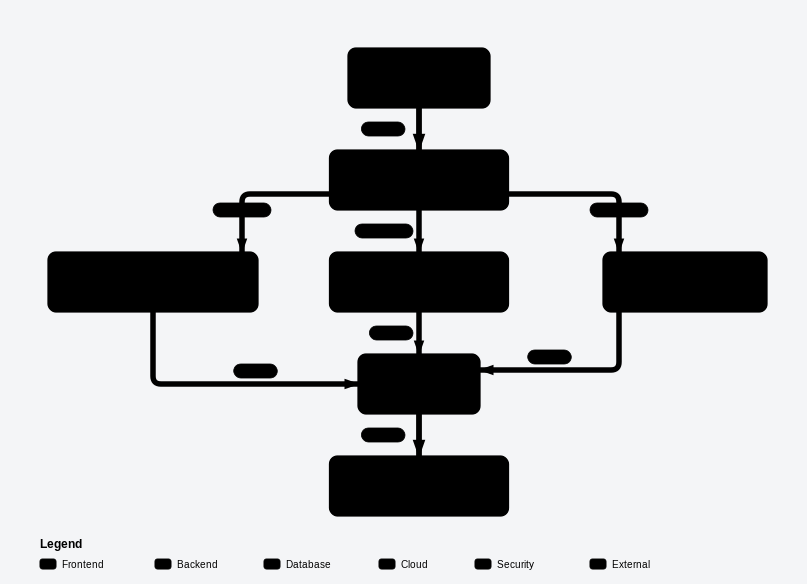
Process names differ between companies, but the sampling logic is similar. Each row is one kind of round; the middle column tells you what evidence it is looking for:
| Round | What the scorer wants to confirm | Most common way to lose points |
|---|---|---|
| Coding | Can you turn a vague problem into clear constraints, pick the right approach, and prove it is correct? | Coding immediately without stating constraints; not checking edge cases afterwards |
| System design | Can you settle requirements and scale first, then make trade-offs, and explain rollout, failure, and evolution? | Drawing a component diagram straight away; covering only the happy path |
| Behavioral | How did you decide under real pressure, and did you actually own the outcome? | Describing what the team did rather than what you did; no numbers or consequences |
| Hiring manager or cross-team | Does the level match, and will you raise the team's overall bar? | Lots of experience but no clear account of your own judgment |
Which technical skills to prepare
The goal is not to "know everything". It is to explain, for each area an interview will touch, the principle, the trade-offs, and an example you have used yourself.
- Algorithms and data structures: learn patterns, not problems: two pointers, sliding window, binary search, BFS/DFS, heaps, monotonic stacks, dynamic programming, union-find. What matters is choosing the pattern from the constraints and stating the invariant. See the Coding Interviews.
- Depth in one main language: concurrency model, memory and GC, collection internals, common pitfalls. Interviewers will follow your code downward.
- Distributed-systems basics: partitioning and replication, consistency models, idempotency, retries and timeouts, backpressure, rate limiting, alternatives to distributed transactions.
- Storage, caching, and messaging: indexes and query plans, cache consistency and stampedes, partitioning, ordering, and consumer semantics in log systems like Kafka.
- Operations and release: SLOs, monitoring and alerting, canaries, rollback, capacity planning. Senior system design rounds always ask "how do you ship it" and "what happens when it breaks". See the System Design Interviews.
- Applied AI engineering (increasingly common): cost and reliability of model calls, RAG, authorization boundaries for Agents. You don't need to be a researcher, but you should be able to design with AI as one unreliable component in a system.
Which abilities to prepare
Abilities can't be improvised. You can only find the evidence in your experience ahead of time. Prepare at least two real stories for each:
- Ownership: taking on a problem nobody owned and seeing it through to the outcome, not just to "my part is done".
- Deciding under ambiguity: how you set direction with incomplete information, and how you set stop-loss and review points.
- Trade-offs and judgment: what you gave up, why, and whether it was right in hindsight.
- Influencing others: how you drove a cross-team decision without authority.
- Holding the quality bar: which line you held under pressure.
- Learning from failure: a real mistake, and what you changed afterwards.
How to turn these into evidence that survives follow-up questions is covered in the Behavioral Interviews.
A preparation order that works back from the bar
- Read the hiring goal first: the job description, level definitions, and any values or principles the company publishes. That is where the scorecard comes from.
- Build an evidence ledger: list your projects and, for each, your decisions, trade-offs, and verifiable outcomes.
- Find gaps against the three layers: fill the thinnest layer first. Fill technical gaps with systematic practice and ability gaps by retelling real experience in more depth, not by inventing stories.
- Speak the target company's language: the same experience emphasizes different sides for different companies. Amazon is the clearest case: it writes its expectations as sixteen Leadership Principles. See the next note.
- Rehearse follow-ups: prepare three levels for every answer: why you did it, what else you considered, and what you would change if you did it again.
References
Related notes
Behavioral Interviews: How to Answer, Common Questions, What to Watch For
Tell real experiences in STAR form from a reusable story bank prepared in advance. Includes common questions by category, the follow-ups interviewers ask, and a checklist for interview day.
Coding Interviews: How to Answer, What to Practice, What to Watch For
Answer each problem in five steps: clarify, compare approaches, estimate, code, test. Includes a practice list grouped by pattern and the most common ways to lose points.
Working on something similar?
I'm always happy to compare notes on distributed systems, delivery, and applied AI.
[email protected]