Multi-Agent Review: Splitting the Work, Isolating It, and Combining Results
Controlling multi-Agent collaboration with risk-driven selection, immutable execution plans, isolated context, completion barriers, and evidence-backed reports.
On this page · 25 sections
The value of multiple Agents does not come from the number of Agents. It comes from independent information gain. If several Workers read the same context, follow the same line of reasoning, and then restate the same conclusion under different role names, the system has merely copied one bias several times.
Marshall's Worker mechanism is therefore not a “virtual team roster” but a set of verifiable contracts:
- Risk-based Selection decides whether Workers are needed at all;
- the Immutable Plan decides what each instance can see and do;
- the Barrier decides when synthesis may begin;
- the Worker Report binds conclusions to evidence and uncertainty.
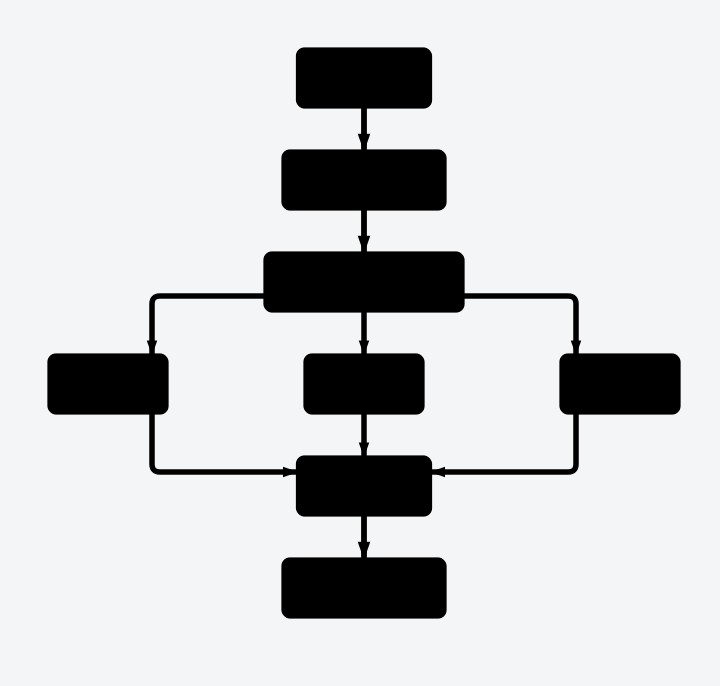
The Parent Agent always owns goal interpretation, risk selection, plan issuance, conflict synthesis, and final delivery. A Worker owns only one narrow question, one read-only context, and one structured output location.
The Short Version
- The value of multiple Agents comes from independent information gain, not headcount; several Workers reading the same context merely copy one bias several times.
- Risk decides whether Workers are dispatched:
lightuses none,standarda few, anddeepis bounded by the capacity limit; when risk coverage exceeds capacity, Selection entersblocked_for_splitand the task is broken down first. - Each Worker gets only a read-only, hashed, isolated context and runs under an immutable Plan; what it can change is set by technical boundaries such as the Capability and the Sandbox, not by the Prompt.
- The Parent synthesizes only after every required member of the Join Barrier has a current, valid Report; synthesis compares evidence rather than counting votes, and a late result cannot satisfy the current Barrier.
The first step is not Spawn, but proving that parallel perspectives are needed
WorkerSelectionV1 first produces a Risk Profile:
axes
domain_count / repo_count
path_clarity
deep_triggers
evidence
The Risk Axes include API, Data, Permission, Runtime, Migration, Backfill, IAM, Production Mutation, Cross-repo, Cross-domain, Source Authority, Security, Domain, Layer, Correctness, Scope, and External Reference. They are not decorative labels; every Axis must be backed by evidence in the form of a Locator, a content Hash, and an observation time.
Selection chooses a Mode according to risk. In the table, look at what triggers each Mode and how many Workers it implies:
| Mode | Contract meaning | Number of Workers | Task shape it suits |
|---|---|---|---|
light |
Clear path, single repository and single domain, no declared risk axes or Deep Triggers | None | The Parent can complete and verify the work directly |
standard |
A small number of risk surfaces that need independent checking | A few | A main analysis paired with a narrow review, or a few mutually independent perspectives |
deep |
Multiple risk axes, or a Trigger such as Migration, Backfill, IAM, production writes, cross-repo, cross-domain, or unclear source authority | Bounded by the capacity limit; Review requires multiple independent perspectives | High risk, a wide search space, or multiple evidence domains |
deep is a risk level, not “a preset headcount that must be filled.” The general contract specifies only the Fan-out capacity, that is, how many Workers may be dispatched at once; the actual lower bound is set by Stage Policy. The Deep contracts for Local Review and PR Review require multiple independent perspectives in order to cover different review surfaces.
If risk coverage needs more than the current capacity, Selection must not quietly truncate instances. It has to enter blocked_for_split: split_required = true, no dispatchable instances are generated, and the Design Unit or Slice is broken down first. This rule keeps context, waiting, and synthesis costs from spiraling out of control within a single layer of Fan-out.
A Role must match its Risk Axes
Every Selected Instance must declare matched_risk_axes, and a role may claim only the Axes it supports. A permission review, for example, cannot stand in for Data Runtime evidence just because its name sounds strict; a domain Worker cannot vote on an IAM conclusion either.
The Validator checks three layers of relationships:
- The Axes a Worker matches must come from the current Risk Profile;
- the role's capabilities must cover every Axis it claims;
- apart from specific mandatory Critics, a Worker with no Risk Match at all cannot be selected.
This turns “why was this Worker called” from an explanation inside a Prompt into a Selection contract that a machine can reject.
The Worker Plan is an immutable execution snapshot
Selection decides only which perspectives are needed; WorkerPlanV1 decides how they are executed. The Plan binds:
audit / workflow / stage / purpose
attempt / run / generation / resume_epoch
design_unit / slice
selection_id + selection_sha256
mode / max_parallel / max_dispatches / max_repair_rounds
instances / barriers
plan_sha256
plan_sha256 covers the complete, ordered Dispatch Payload. Once a run has started, changing the Prompt, Model, Context, permissions, output path, or number of Workers requires a new Plan; it cannot be done through verbal additions under the original Plan. Otherwise the final Report cannot prove which instructions it actually executed.
Each Worker Instance is also bound to its own fine-grained contract:
instance_id / worker_id / node_id
role / phase / matched_risk_axes
context_refs / output_binding
agent_contract
depends_on_instance_ids / join_barrier_id
Within it, the Agent Contract freezes:
- the Hashes of the configuration file and Prompt;
- the requested and actual Model;
- Reasoning Effort and Service Tier;
- Sandbox and Network Policy;
- the Output Schema with its Hash.
The role name describes only semantic responsibility; the real capability boundary comes from these fields.
Context Isolation is the precondition for independent evidence
A Worker does not read the full conversation, nor does it inherit all of the Parent's reasoning. Each instance receives only a generated Dispatch Context, whose references include:
- the Artifact Role, path, and SHA-256;
access: read_only;- the Context Manifest ID, path, and Hash;
- the path and Hash of the Team Contract;
- the Hash of the exact Source Set.
This makes it possible to answer “which bytes is this conclusion based on,” rather than knowing only that “the Worker probably looked at the repository.” Once the Context Hash changes, an old Report can no longer be reused.
Isolation also has to prevent Anchoring, that is, a Worker being pulled toward a conclusion it saw first. Marshall places an explicit constraint on the explore and pre_draft phases: their Context must not contain design_draft or final_design.
Showing a Worker the main proposal first and then asking it to “explore independently” usually yields only minor tweaks around that proposal. When independent evidence is really needed, the main conclusion should be isolated and the Worker given only the question, the source code, and the source boundaries.
But isolation must not be overdone either. Taking away all context makes Workers rediscover known facts and creates duplicate cost. A sensible Context Pack shares the goal, terminology, current source version, and safety boundaries, while isolating the Parent's intermediate judgments and unrelated material.
Capability limits what a Worker can modify
The Parent holds the Stage Lease and issues short-lived Capabilities to Workers according to the Plan. A Capability is bound to the Run, Plan, Worker/Instance, permitted role, Context Path, TTL, and current Lease Fence.
A Worker's write scope on State is limited to two kinds of operations:
start: register its own Run and Node execution status;publish: publish a Worker Result, Selected Worker, Node status, or Late Result.
If a Worker Mutation touches Approval, Delivery, Mutation Intent, or any other unauthorized State field, the Runtime rejects the entire CAS (compare-and-swap, that is, a state update that checks the version before it writes). “Read-only” written in a Worker's Markdown Prompt is only an intent; the Capability, the State Mutation Allowlist, the Read-only Sandbox, and the Network Policy are the technical boundary.
This also makes responsibility explicit: a Worker can report “recommend Push,” but it cannot convert that recommendation into Push permission; it can discover a production data risk, but that does not give it the ability to query or write the data.
Parallelism must be governed by budget and dependencies
The Plan limits three budgets together:
max_parallel_workers: instantaneous concurrency;max_total_dispatches: the total number of calls across the whole plan;max_repair_rounds: the number of repair rounds after failure.
Each Instance can declare dependencies on other Instances, and the Plan must be acyclic. Truly independent Workers can run in parallel; a Worker that needs an earlier result must be explicitly ordered after it. Forcing dependent tasks to run in parallel does not improve throughput. It only produces stale assumptions and rework later.
A Join Barrier uses an explicit member list and kind: all. The Parent may proceed to synthesis only after every required member of the Barrier has a current, valid, verifiable Report. A Barrier cannot open automatically because “we have waited long enough,” and it cannot quietly add optional roles that Selection did not choose to the wait set.
The Review Stage also disables Repair Rounds outright: a review Worker's job is to find and prove problems, not to repeatedly modify the main proposal inside its own isolated context. Repairs are replanned by the Parent, so that a Reviewer never becomes the one who makes its own findings go away.
A Worker Report is not a free-form summary
WorkerReportV1 splits the result into machine status and semantic content:
execution_status: completed | failed | timed_out | cancelled | stale
verdict: pass | findings | blocked | deferred
severity
findings[]
evidence_locators[]
blocking
recommended_route
missing_evidence[]
report_body
Every Finding has an ID, a summary, a severity, a blocking flag, and Evidence Locators, and can also be bound to an Uncertainty, Claim, Decision, and Node. The Control section of the Report further binds the Selection/Plan, Attempt, Generation, Resume Epoch, Context Hash, Role Prompt Hash, Report Schema Hash, and Worker Payload Hash.
So “the security Worker says there is a problem” is not yet a usable conclusion. The Parent must be able to locate the evidence the Worker read, confirm that the Report belongs to the current Plan, and judge whether the Finding really applies to the current scope.
Uncertainty must choose a Route
A Worker should not fill in missing information with a confident tone. The Report structures Uncertainty as:
- its type;
- whether it is Material;
- whether it is discoverable;
- the evidence already checked;
- the affected Node/Claim/Decision;
- the earliest invalidated node;
- the next Route.
The permitted Routes are:
continue: the unknown does not affect the current decision;bounded_explore: perform one more bounded, read-only round of discovery;question_gate: the user needs to make a Material Choice;clarify_reentryordesign_reentry: invalidate the relevant downstream results and return to an earlier stage;block: necessary evidence is missing and it is not safe to continue.
This design avoids two extremes: a Worker blocking everything the moment it meets an unknown, or dressing the unknown up as an inference and pressing on.
Freshness and Late Results
The most dangerous thing in a parallel system is not a Worker failing, but a Worker succeeding too late.
Suppose several Workers run concurrently against Generation n, and the Parent revises the inputs on the basis of some of the reports and moves to Generation n + 1. The other Workers return afterward. Even if their output passes the Schema and their conclusion is correct, it is still not current evidence for the new Generation.
Publication must re-check:
plan / selection
attempt / run / generation / resume_epoch
lease fence / capability
context / prompt / schema hashes
A result that does not match goes into Stale or late_results. It keeps its audit value but cannot satisfy the current Barrier. Simply “merging in” a late result reintroduces inputs that have already been invalidated.
Parent synthesis is not majority voting
When several Workers return conflicting conclusions, the right move is not to count pass against findings. LLM errors tend to be correlated: the same model, the same context, and similar Prompts can leave the majority opinion sharing a single blind spot.
Parent synthesis should proceed in this order:
- Deduplicate identical Evidence Locators and substantively identical Findings;
- compare source authority, version, and observation time;
- distinguish factual conflicts, interpretive conflicts, and product trade-offs;
- perform one bounded Readback for facts that are discoverable, that is, go back to the source and read it again;
- send trade-offs that neither code nor documentation can settle to a Question Gate;
- bind each adopted, rejected, or deferred Finding to a Decision.
What a Worker provides is expert evidence, not a vote that carries responsibility. The final Scope, Trade-offs, and external actions are still decided by the Parent and by user authorization.
The cost model of multiple Agents
Parallelism can reduce Wall-clock Time, but it usually increases total Tokens, tool calls, context duplication, and synthesis cost. A simple inequality helps decide whether adding Workers is worthwhile:
Expected benefit
= probability of an independent finding × impact of the problem × value of finding it early

Expected cost
= Dispatch + Context packaging + waiting + Report validation
 + duplicate exploration + Parent synthesis + Stale/Late recovery
Fan-out is justified only when the expected benefit clearly exceeds the cost. Independently searching multiple data sources, cross-domain security review, and reading mutually independent repositories in parallel usually pay off well; repeatedly running similar Reviews around the same function usually pays off very little.
Anthropic reports that in its own Research system, multiple Agents used more than an order of magnitude more Tokens than ordinary Chat, and notes that most Coding Tasks have a smaller parallelizable portion than Research does.
That magnitude comes from their specific system and evaluation; it is not a performance benchmark for Marshall. What it shows is the direction: the capability gain from multiple Agents comes mainly from spending more independent compute, and parallelism cannot be assumed to be cheaper by nature.
Common failure modes
Role Theater
The role names differ, but the Context, Prompt, and Evidence Source are the same. The fix lies in Risk Match, Context Isolation, and Evidence Binding, not in adding more roles.
Duplicate Exploration
The task boundary says only “investigate this problem,” and several Workers search exactly the same paths. The Plan should spell out each instance's sub-question, source scope, stopping condition, and output contract.
Anchored Critic
An Explore Worker sees the Design Draft first and looks only for small problems around the existing proposal. When independent discovery is needed, the Pre-draft Context should not contain the main proposal.
Correlated Majority
Several Workers arrive at the same wrong conclusion because they share a model and materials. Synthesis must compare evidence quality; a vote count cannot replace Readback.
Barrier Under-specification
The Parent continues before a required Worker has published a current Report. A Barrier must be bound to exact Instances, not to “some of them have returned.”
Barrier Over-specification
A low-risk task waits for every optional role, or a cancelled Worker still blocks the stage. Barrier members must come from the actual Selection, with clear paths for cancellation, timeout, and replanning.
Late Result Accepted as Fresh
A report from an old Generation is folded into the new design. Publication and the Barrier must re-validate the complete execution identity.
Unbounded Hierarchy
Workers recursively create more Workers, and coordination cost grows exponentially. Marshall controls depth and width with instance limits, the Dispatch Budget, Repair Rounds, and blocked_for_split.
Worker Escapes Its Role
A review Worker modifies code directly or calls an external Provider. The read-only Sandbox, Capability, and State Allowlist must constrain it together; the Prompt alone cannot be relied on.
Synthesis Becomes the Bottleneck
Workers produce large volumes of repetitive long-form text, and the Parent's context is flooded with reports. A Report should structure its Findings and Locators, keep the long body in an Artifact, and have the Parent load only the parts that would change a decision.
Where it applies, and the Trade-offs
Worker orchestration suits tasks whose sub-problems can be explored independently, whose evidence sources differ, whose results can converge through a clean interface, and where the cost of a miss is high enough to cover the extra expense. Examples include cross-repository call chains, simultaneous changes to data and permissions, breadth-first research, or cases that need a design Critic and Deterministic Verification that are independent of each other.
It does not suit tasks with strongly shared context, highly serial steps, several writers touching the same piece of code, or a narrow scope the Parent can verify in a single read. Splitting those up adds context duplication, synchronization, and conflicts without adding any new evidence.
The design goal for multiple Agents is not maximum concurrency but the minimum sufficient set of independent perspectives: dispatch only the Workers that can change the current decision, and make every conclusion traceable, expirable, rejectable, and recomputable.
References
- OpenAI Agents SDK: Agent orchestration: the task shapes suited to Managers, Handoffs, LLM orchestration, and code orchestration.
- Anthropic: How we built our multi-agent research system: Orchestrator-Worker, parallel research, coordination failure modes, and the Token cost observed in their system.
- Anthropic: Effective context engineering for AI agents: the trade-offs among finite Context, Subagents, Compaction, and on-demand loading.
Related notes
Agent Architecture: Should the Program or the Model Decide the Next Step
The difference between Workflow, Autonomous, and Hybrid is not the framework but who decides the next step. This article covers when each pattern fits, how each one fails, and a selection method that starts from task conditions.
Five Questions to Answer Before Putting Agents into Production
Cost and risk, who holds control, how delivery is verified, which layer owns model calls, and how it is evaluated after launch: answer these in order before writing Agent code.
Working on something similar?
I'm always happy to compare notes on distributed systems, delivery, and applied AI.
[email protected]