Turning Retrieval Candidates into an Engineering Conclusion You Can Deliver
Retrieval finds the entry point and the original source confirms the fact; the final answer must keep verified, inferred, and unknown apart.
On this page · 12 sections
After local RAG returns its results, the most dangerous move is to hand every fragment to a large model and ask it to “summarize more completely.” Fluency hides the differences between sources: a goal from Jira, an old design from Confluence, and a same-named method from a different commit get joined into a story with no obvious flaw.
mt_rag calls retrieval results evidence candidates. The job of developer output is not to polish the candidates. It is to turn them into an engineering conclusion that can be located, can be declined, and can be evaluated.
The Short Version
- Retrieval results are only evidence candidates; deterministic code first produces
DeveloperAnswerV1, and Codex may organize the wording but may not change the chain, the confidence, or the citation IDs. - The answer is
completeonly when a full verified path exists; otherwise it ispartialorinsufficient, and no call chain is generated. - There are at most 10 citations, spent first on covering every edge of the call chain; confidence comes from a fixed formula that the LLM cannot raise.
- Evaluation is split into at least four layers: retrieval, graph, grounding, and citation. Production cutover has not been performed, and readiness must be reported separately from live effectiveness.
Knowledge Map for This Article
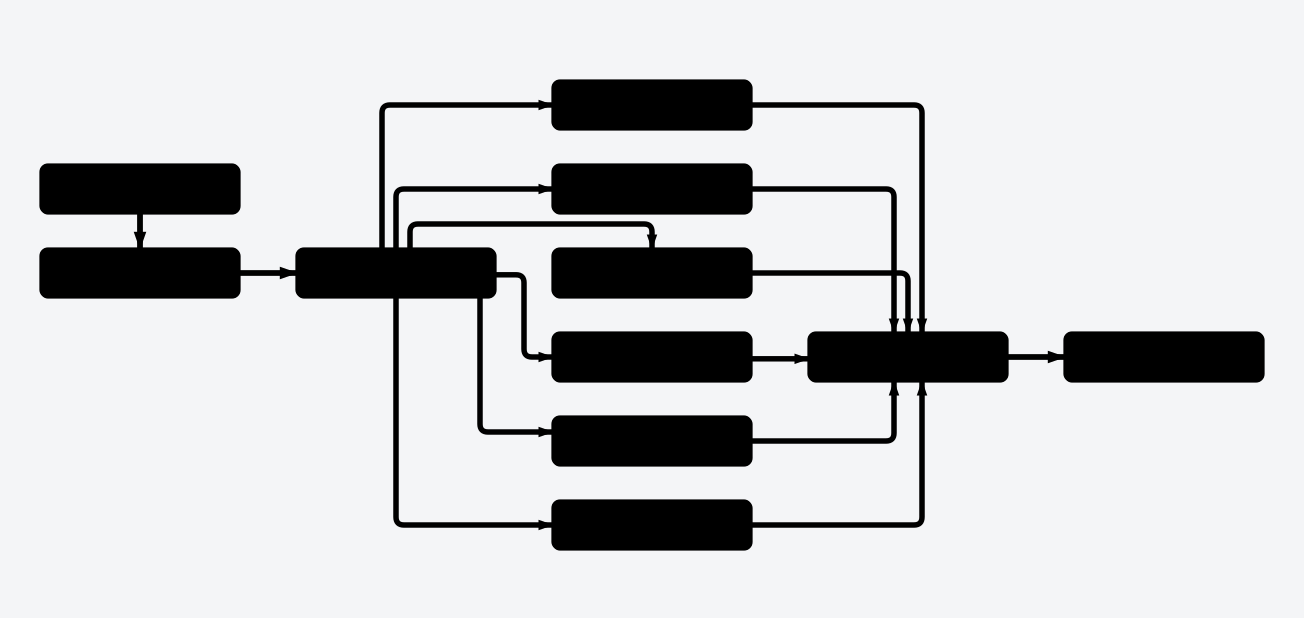
This chapter covers claim-to-evidence, deterministic confidence, the citation contract, human-first rendering, observability, and layered evaluation.
The Canonical Answer Comes Before the Visible Write-up
System Shadow first has deterministic code produce DeveloperAnswerV1:
status = complete | partial | insufficient
call_chain
code_with_chinese_comments
overall_confidence
citations (at most 10)
limitations
summary_facts
The evidence decides the value of status. A verified path here is a call path whose every edge has verified evidence:
complete: only when a full verified path exists.partial: no path, but there is locatable material.insufficient: not even a locatable citation.
When the controller's final action is neither answer nor rerank, force_insufficient is applied: even if retrieval hit plenty of similar text, no call chain is generated.
This structure is the factual contract. Codex may organize it into more natural Chinese prose; it may not change the chain, the confidence, or the citation IDs.
Why the First Two Sections of the Human-Readable Output Are Fixed
The visible answer currently requires:
业务 Summary(business summary): states concretely what it does, the input or trigger, the core processing logic, and the result or impact.简约调用链(compact call chain): one verifiedentry --> processing --> destination.- Code, confidence, citations, limitations, and machine data.
Summary and chain come first so that an engineer reads the conclusion first. Machine diagnostics come later so that a screenful of retrieval counts does not stand in for a business explanation. But the summary may use only summary_facts; being written for people does not license adding new business rules.
When there is no verified chain, the second section states explicitly: “Insufficient evidence; no call chain was generated.” That sentence is not a failed experience. It is a correct completion state: the reader knows that what is missing is relationship evidence, rather than assuming the system forgot to show it.
Citations Must Cover the Chain, Not Decorate the Answer
Citations come from two kinds of source:
- Article evidence: page/section/issue, with source record, URL, and locator.
- Code evidence: repo, file, class/method, line, and commit.
System Shadow returns at most 10, ordered as follows:
- First, the first piece of evidence for each edge of the selected verified path.
- Then other path evidence.
- Only last, related retrieval hits.
The citation budget is thus spent first on supporting the call chain, not on displaying ten similar pages.
If the required evidence for an edge does not make it into the final citations, the answer is downgraded to partial and the gap is written into the limitations. If the locator, revision, or verification of any path evidence is incomplete, the entire path stays out of call_chain.
Confidence Is Not the Model's Self-Assessment
When a verified chain exists, the overall confidence in System Shadow is composed of four parts:
0.40 base for a verified chain
+ 0.25 * edge evidence coverage
+ 0.20 * retrieval quality
+ 0.15 * source currentness
Retrieval quality looks at whether the top ten hits come from both the vector and keyword lanes. Source currentness uses freshness for Confluence and commit currentness for code. Without a chain, confidence is capped at 0.49 and rises only slightly with the number of locatable citations.
This formula is not a probability-calibrated “answer accuracy.” It is a repeatable engineering signal. Its important properties are:
- The LLM cannot raise it.
- The same evidence input yields the same value.
- There is an explicit ceiling when the verified path is missing.
Interpreting it as a probability later would still require reliability diagrams (that is, calibration plots of confidence against actual correctness) and calibration against a genuinely labeled set.
Why the Output Code Expresses Only Order
The current code section generates:
const verifiedCallChain = [
  "entrySymbol", // entry point
  "providerMethod", // reaches the final destination via CALLS
] as const; // expresses only the verified order
It deliberately does not generate parameters, return types, error handling, or runtime values, because a graph path proves only node order and relations. Unless those details are verified item by item in the code evidence, filling them in would widen the claim surface.
A real development task should still open the current repo to verify signatures, tests, and config. RAG output shortens the time to find the entry point; it does not replace a review of the current working tree.
Three Kinds of Observability Data Must Not Be Mixed
The current system distinguishes three kinds of observability data. Look at the last column: their retention and use differ.
| Observability surface | What it records | Retention/use |
|---|---|---|
| Generation trace | Inputs and outputs of each refresh step, checkpoints, adds/deletes/updates, errors | Partitioned by run, with a retention policy on the order of months |
| Query log | Rewrite, search, Neo4j, controller, rerank, and aggregate events | Partitioned by query, with a retention policy on the order of months |
| Durable lineage | Manifest, traceability, checkpoints, event journal | Not cleaned up by runtime-log retention |
Runtime logs answer “what happened this time.” Durable lineage answers “which inputs produced the current projection, and where to replay from next time.” Treating the query log as the source of truth means losing re-entrant state once the monthly retention policy cleans it up. Treating the durable journal as a UI log makes a single slow request hard to investigate.
Evaluation Must Separate Retriever, Graph, and Generator
A final answer can be correct by accident while resting on the wrong citation. Equally, the retriever can find the right document while the generator fails to cite the key claim. So there are at least four layers, each with its own metrics and focus:
| Layer | Suggested metrics | Focus in this project |
|---|---|---|
| Retrieval | Recall@K, MRR, exact top-1, repo/commit match | The separate contributions of dense, keyword, and exact |
| Graph | Anchor coverage, verified path coverage, false path rate | No candidate edge may pose as a chain |
| Grounding | Claim faithfulness, unsupported claim rate | The summary uses only canonical facts |
| Citation | Citation correctness, completeness, locator validity | Whether edge evidence is covered |
Unanswerable queries must also be part of the evaluation, to measure insufficient precision. Testing only “questions the system knows the answer to” encourages it to generate content for every input.
One recent complete shadow generation passed the local integrity checks, with both the vector and graph cursors at the current version. That is neither a permanent scale figure nor a production accuracy metric. Production cutover has not been performed, and readiness must be reported separately from live effectiveness.
That snapshot also exposed an evaluation gap worth preserving: the shadow's retrieval overlap did not reach the threshold of the general readiness gate, yet the production validator could still judge it ready, because it uses a different citation-coverage condition.
The two gates are inconsistent. The right response is not to pick the better-looking result. It is to unify the definition, and until then to scope ready=true to “the internal consistency check of the current production validator passed.”
Failure Modes and Trade-offs
Each row below is one failure. Look at the last column: what each output behavior costs.
| Failure mode | Output behavior | Trade-off |
|---|---|---|
| Hits but no verified path | Partial/insufficient; no chain is generated | Fewer guesses, preserving the correctness of call relationships |
| Citation locator missing | Not included as a citation | May reduce the number of references, but each one can be traced back |
| Edge evidence exceeds 10 | Cover the path first; mark the uncovered gap | The citation budget is capped; complex branches need a separate in-depth report |
| Codex changes the chain/confidence | Rejected; the deterministic renderer is used | Readability drops; canonical facts are unchanged |
| Summary contains only source titles/statistics | Treated as not concrete; fallback | What is needed is better evidence, not fancier wording |
| Query log expired | Returns an explicit expired status; durable lineage is retained | Controls disk usage without breaking replay |
| Shadow ready | Still no automatic cutover | Release speed yields to independent authorization and production readback |
| The two readiness gates have different thresholds | Report the specific validator, overlap, and citation coverage | Avoids misreading an internal-integrity flag as a unified quality bar |
Verifiable Project Evidence
src/mt_rag/query/answer.py:DeveloperAnswerV1, the verified chain, citations, confidence, and limitations.src/mt_rag/query/runtime.py: the canonical answer, Codex organizer validation, and the fallback renderer.src/mt_rag/core/observability.py: generation trace, query log, and retention.src/mt_rag/system_graph/query.py: path evidence completeness.docs/02-runbooks/local-llm-service.md: external strict output, streaming progress, and the query log contract.- Local readiness artifacts: the generation, cursor, and blocker state of one shadow run.
docs/05-reports/phase-2-through-11-completion-report.md: tests, re-entry, rollback, and the not-yet-cut-over boundary.
References
- ALCE: Automatic LLMs' Citation Evaluation
- RAGAS
- RAGChecker
- Attributed Question Answering
- BEIR
- W3C PROV-O
What local RAG ultimately saves is the time spent finding evidence, not the time spent verifying. An answer can be incomplete, but every conclusion it does write down should know which piece of verifiable evidence supports it.
Related notes
LLM Runtime: Which Layer Should Own Rate Limits, Retries, and Routing
Once the second business, the second provider, and the second tenant show up, calling the SDK directly is no longer enough. This piece covers the responsibility boundary of an LLM Runtime, multi-model routing, reliability under high concurrency, and how to choose an observability approach.
Local RAG Design: Store the Evidence First, Then Retrieve
How mt_rag separates replayable evidence, rebuildable query views, verified graph paths, and bounded generation—and why current source still wins.
Working on something similar?
I'm always happy to compare notes on distributed systems, delivery, and applied AI.
[email protected]